Introduction
Advanced endometriosis can be one of the most challenging gynecological conditions to diagnose and treat. While hormonal therapies may help manage symptoms, many patients with severe disease eventually require surgery, particularly when endometriosis affects the ovaries, bowel, bladder, pelvic nerves, or multiple pelvic structures.
Dubai has emerged as a regional destination for advanced minimally invasive gynecologic surgery, offering access to experienced laparoscopic and robotic surgeons, modern hospitals, and multidisciplinary care teams. However, one of the most common questions patients ask is:
How much does advanced endometriosis excision surgery cost in Dubai?
The answer depends on disease severity, surgical complexity, hospital selection, surgeon expertise, anesthesia requirements, and whether additional specialists such as colorectal or urologic surgeons are involved.
Featured Snippet Answer
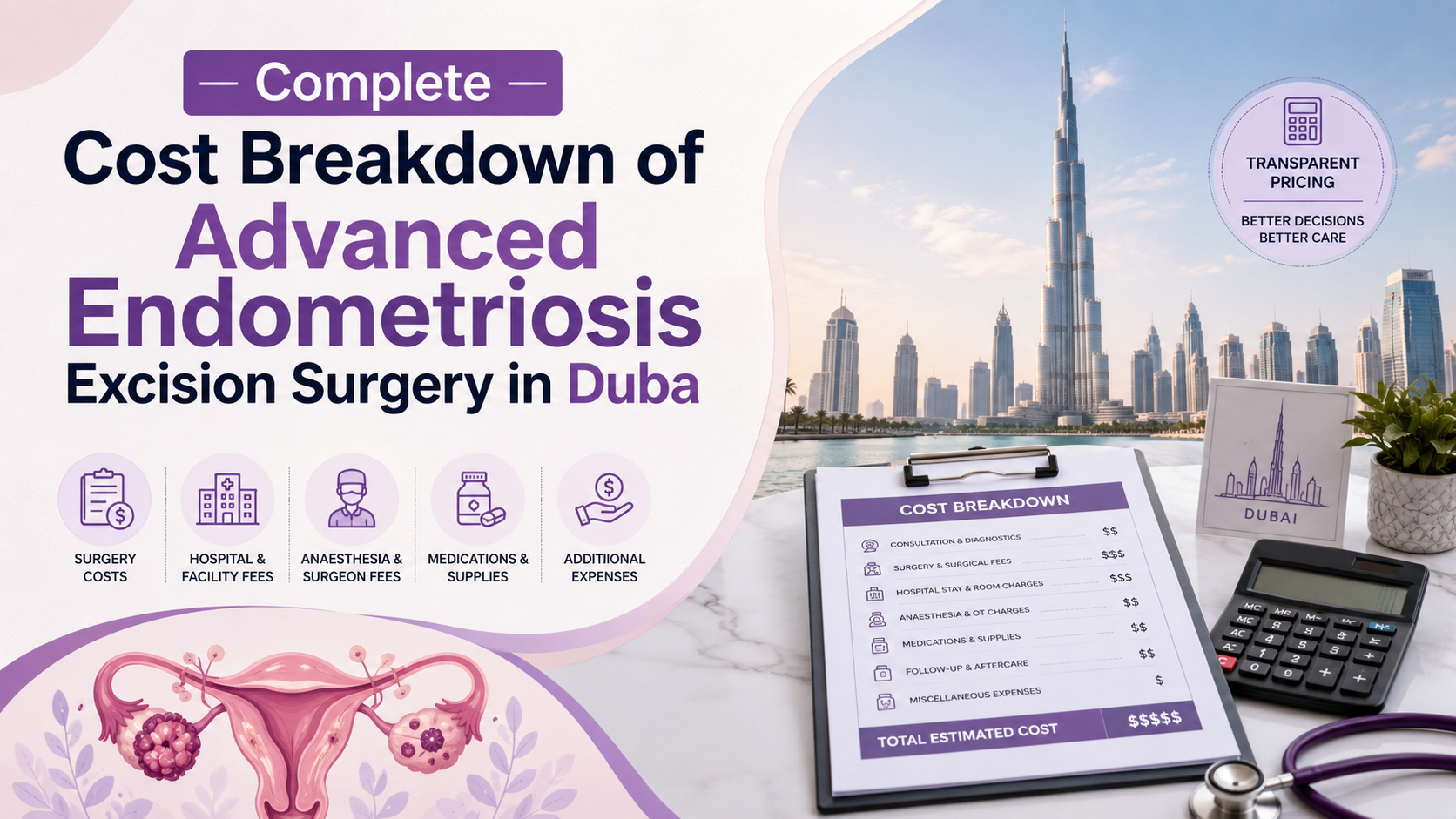
Advanced endometriosis excision surgery in Dubai typically costs significantly more than routine gynecological procedures because treatment often requires complex laparoscopic or robotic surgery, advanced imaging, longer operating times, multidisciplinary surgical teams, hospitalization, pathology analysis, and extensive postoperative care.
The final expense may include:
- Specialist consultations
- Diagnostic imaging
- Preoperative laboratory testing
- Surgeon fees
- Anesthesia fees
- Operating room charges
- Hospital stay
- Pathology examination
- Medications
- Follow-up appointments
- Fertility-related assessments when applicable
Patients with deep infiltrating endometriosis affecting the bowel, bladder, ureters, or reproductive organs generally face higher treatment costs due to increased surgical complexity.
Key Takeaways
- Endometriosis excision surgery aims to remove disease tissue rather than simply destroy visible lesions.
- Advanced cases often require highly specialized surgeons.
- Surgical costs vary substantially depending on disease extent.
- Robotic-assisted procedures may increase overall expenses.
- Additional specialists can significantly affect total pricing.
- Insurance coverage varies by policy and medical necessity criteria.
- Recovery-related expenses are frequently overlooked during budgeting.
- Long-term symptom improvement depends on disease severity and surgical expertise.
Understanding Advanced Endometriosis
Endometriosis occurs when tissue similar to the lining of the uterus grows outside the uterus. In advanced disease, lesions may invade:
- Ovaries
- Fallopian tubes
- Pelvic ligaments
- Rectum
- Sigmoid colon
- Bladder
- Ureters
- Pelvic nerves
Many specialists consider excision surgery the preferred surgical approach for complex disease because it aims to completely remove visible endometriotic lesions rather than superficially destroy them.
Symptoms of Advanced Endometriosis
| Symptom | Common in Advanced Disease? |
|---|---|
| Severe pelvic pain | Yes |
| Painful menstrual periods | Yes |
| Pain during intercourse | Yes |
| Chronic pelvic discomfort | Yes |
| Infertility | Common |
| Painful bowel movements | Common |
| Painful urination | Possible |
| Lower back pain | Common |
| Gastrointestinal symptoms | Common |
| Fatigue | Frequently reported |
Symptoms do not always correlate with disease severity. Some patients with extensive disease experience relatively mild symptoms, while others with less extensive disease may have severe pain.
Causes of Endometriosis
The exact cause remains incompletely understood.
Potential contributing mechanisms include:
- Retrograde menstruation
- Genetic predisposition
- Immune system dysfunction
- Hormonal influences
- Inflammatory processes
- Cellular transformation theories
Current evidence suggests that endometriosis likely develops through multiple biological mechanisms rather than a single cause.
Risk Factors
Factors associated with increased risk include:
| Risk Factor | Potential Association |
|---|---|
| Family history | Increased risk |
| Early menstruation | Possible |
| Short menstrual cycles | Possible |
| Heavy menstrual bleeding | Possible |
| Delayed childbirth | Possible |
| Infertility history | Associated |
| Certain congenital reproductive abnormalities | Increased risk |
Cost Components of Advanced Endometriosis Excision Surgery in Dubai
1. Initial Specialist Consultation
Before surgery, patients typically undergo evaluation by a gynecologic surgeon.
Potential expenses may include:
- Specialist consultation
- Medical history review
- Pelvic examination
- Prior record assessment
- Surgical planning
2. Diagnostic Testing Costs
Advanced endometriosis frequently requires extensive investigation.
Common Diagnostic Tests
| Test | Purpose |
|---|---|
| Pelvic ultrasound | Initial evaluation |
| MRI pelvis | Mapping deep infiltrating disease |
| Blood tests | Surgical preparation |
| Fertility testing | Reproductive assessment |
| Urinary tract evaluation | Complex cases |
| Colon assessment | Bowel involvement cases |
MRI imaging often plays an important role when surgeons suspect deep infiltrating endometriosis.
3. Surgeon Fees
Surgeon fees are among the largest cost drivers.
Pricing may vary according to:
- Years of experience
- Fellowship training
- Endometriosis specialization
- Surgical complexity
- Operating time required
Cases involving bowel, bladder, or ureter reconstruction generally command higher fees than isolated pelvic disease.
4. Anesthesia Costs
Anesthesia charges may include:
- Pre-anesthesia assessment
- Intraoperative anesthesia care
- Monitoring equipment
- Recovery room supervision
Longer surgeries generally result in higher anesthesia-related expenses.
5. Operating Room Charges
Operating room expenses often reflect:
- Procedure duration
- Specialized equipment
- Surgical instruments
- Energy devices
- Robotic systems (when used)
Complex endometriosis surgeries can last substantially longer than standard gynecologic procedures.
6. Hospitalization Costs
Hospital-related expenses may include:
- Private room charges
- Nursing care
- Monitoring services
- Medical supplies
- Meals
- Postoperative recovery services
Some patients are discharged within a day, while others require longer observation depending on surgical complexity.
7. Multidisciplinary Surgical Team Costs
Advanced disease may require collaboration with:
- Colorectal surgeons
- Urologists
- Fertility specialists
- Pain specialists
Each additional specialist may contribute separate professional fees.
8. Pathology Examination
Removed tissue is typically sent for laboratory analysis.
Pathology costs may include:
- Specimen processing
- Microscopic evaluation
- Diagnostic reporting
This step helps confirm the diagnosis and assess excised tissue.
9. Postoperative Medication Costs
Common medications may include:
| Medication Category | Purpose |
|---|---|
| Pain medications | Pain control |
| Anti-inflammatory agents | Symptom relief |
| Antibiotics | Selected cases |
| Hormonal therapies | Recurrence management |
| Nausea medications | Recovery support |
Medication needs vary considerably between patients.
10. Follow-Up Care Costs
Follow-up expenses may involve:
- Surgical reviews
- Wound assessments
- Imaging when necessary
- Ongoing symptom monitoring
- Fertility counseling
These costs are often underestimated when budgeting for treatment.
Factors That Increase Surgical Costs
Several variables can substantially affect the final bill.
Deep Infiltrating Endometriosis
Disease invading:
- Bowel
- Bladder
- Ureters
- Pelvic sidewall
typically requires more extensive surgery.
Robotic Surgery
Robotic-assisted procedures may increase costs because of:
- Equipment expenses
- Specialized training requirements
- Operating room utilization
Fertility Preservation Considerations
Patients seeking fertility preservation may require:
- Reproductive endocrinology consultation
- Egg freezing discussions
- Additional reproductive assessments
Differential Diagnosis
Not all chronic pelvic pain is caused by endometriosis.
| Condition | Similar Symptoms |
|---|---|
| Adenomyosis | Pelvic pain, heavy periods |
| Pelvic inflammatory disease | Pelvic pain |
| Irritable bowel syndrome | Bloating, bowel symptoms |
| Interstitial cystitis | Urinary pain |
| Ovarian cysts | Pelvic discomfort |
| Fibroids | Pelvic pressure |
| Chronic pelvic pain syndrome | Persistent pain |
Accurate diagnosis is essential before proceeding with surgery.
Treatment Options Beyond Surgery
Not every patient requires immediate surgery.
Medical Management
Options may include:
- Combined hormonal contraceptives
- Progestin therapies
- GnRH-based treatments
- Pain management strategies
Physical Therapy
Pelvic floor physical therapy may help selected patients.
Fertility Treatment
Patients experiencing infertility may require:
- Reproductive specialist evaluation
- Assisted reproductive technologies
Treatment plans should be individualized.
Medication Considerations
Patients should discuss:
- Current medications
- Blood thinners
- Hormonal therapies
- Diabetes medications
- Herbal supplements
Certain medications may need adjustment before surgery.
Side Effects and Risks of Surgery
Potential risks include:
- Bleeding
- Infection
- Adhesion formation
- Injury to bowel
- Injury to bladder
- Ureter injury
- Anesthesia complications
- Recurrence of symptoms
The likelihood of complications varies according to disease severity and surgical complexity.
Prevention Guidance
There is currently no proven method to completely prevent endometriosis.
However, patients may benefit from:
- Early medical evaluation
- Timely symptom investigation
- Appropriate follow-up
- Individualized treatment planning
Early intervention may help reduce progression-related complications in some cases.
Prognosis and Recovery
Recovery depends on:
- Disease extent
- Surgical approach
- Overall health
- Presence of bowel or urinary tract involvement
Many patients experience meaningful symptom improvement after expert excision surgery, although recurrence remains possible.
Long-term outcomes vary considerably among individuals.
Emergency Warning Signs After Surgery
Seek urgent medical attention if any of the following occur:
- Severe uncontrolled pain
- Heavy bleeding
- Chest pain
- Difficulty breathing
- High fever
- Persistent vomiting
- Inability to urinate
- Significant abdominal swelling
- Signs of wound infection
These symptoms require prompt medical assessment.
Evidence-Based Insights
Current clinical literature generally supports excision surgery as an important treatment option for selected patients with symptomatic endometriosis, particularly those with deep infiltrating disease.
However:
- Surgical outcomes vary by surgeon expertise.
- Not all patients experience complete symptom resolution.
- Recurrence can occur.
- Fertility outcomes differ among individuals.
- Research continues to evolve regarding optimal long-term management strategies.
Patients should understand that surgery is often one component of a broader treatment plan.
Clinical Comparison Table
Excision Surgery vs Ablation Surgery
| Feature | Excision Surgery | Ablation Surgery |
|---|---|---|
| Removes lesion tissue | Yes | Not necessarily |
| Histological confirmation | Usually possible | Limited |
| Deep disease management | Better suited | Less suitable |
| Technical complexity | Higher | Lower |
| Operating time | Often longer | Often shorter |
| Specialist expertise required | High | Moderate |
Expert-Level FAQs
How much does advanced endometriosis surgery usually cost in Dubai?
Costs vary widely depending on disease severity, surgeon expertise, hospital choice, operating time, and whether additional specialists are involved. Patients should request an itemized estimate before surgery.
Why is excision surgery more expensive than standard gynecologic procedures?
Excision surgery is technically demanding and often requires advanced imaging, specialized surgeons, longer operating times, and multidisciplinary care.
Does insurance cover endometriosis excision surgery?
Coverage depends on policy terms, medical necessity requirements, preauthorization rules, and network restrictions.
Is robotic surgery better than laparoscopic surgery?
Not necessarily. Outcomes often depend more on surgeon expertise and disease complexity than on the specific surgical platform used.
Can endometriosis return after surgery?
Yes. Recurrence is possible even after extensive excision surgery.
Will surgery improve fertility?
Some patients experience improved fertility after treatment, but outcomes vary based on age, ovarian reserve, disease severity, and other reproductive factors.
How long is recovery after advanced excision surgery?
Recovery varies significantly. Minimally invasive procedures generally allow faster recovery than open surgery, but complex cases may require longer healing periods.
Is surgery always necessary for endometriosis?
No. Many patients are initially managed with medications, hormonal therapy, pain management strategies, or fertility-focused treatment plans.
Suggested Internal Linking Opportunities
- Understanding Deep Infiltrating Endometriosis
- Endometriosis and Infertility Treatment Options
- Pelvic Pain: Causes and Diagnostic Approach
- Robotic Gynecologic Surgery Explained
- MRI for Endometriosis Mapping
- Recovery After Laparoscopic Gynecologic Surgery
- Hormonal Treatment Options for Endometriosis
Conclusion
Advanced endometriosis excision surgery in Dubai represents a highly specialized intervention designed to treat complex disease affecting pelvic organs and surrounding structures. The total cost extends beyond the surgical procedure itself and may include consultations, diagnostic imaging, anesthesia, hospital charges, pathology services, medications, follow-up care, and multidisciplinary specialist involvement.
Patients considering surgery should seek evaluation from experienced endometriosis specialists, request detailed cost estimates, review insurance benefits carefully, and discuss realistic expectations regarding symptom relief, fertility outcomes, recovery timelines, and long-term disease management.
Medical Disclaimer
This article is intended for educational and informational purposes only and should not be considered medical advice, diagnosis, or treatment guidance. Endometriosis management should be individualized and discussed with a qualified healthcare professional. Surgical decisions, treatment selection, and cost estimates vary according to patient-specific factors, local healthcare systems, insurance coverage, and physician recommendations. If you are experiencing severe symptoms or a medical emergency, seek immediate medical care.
Leave a Reply