Introduction
Prominent ears can affect self-confidence in both children and adults. Otoplasty, commonly known as ear pinning surgery, is a cosmetic procedure designed to reshape, reposition, or reduce the prominence of the ears. In Dubai, otoplasty is offered by plastic surgeons, facial plastic surgeons, and reconstructive specialists across private hospitals and cosmetic surgery centers.
One of the most common questions patients ask is: How much does otoplasty cost in Dubai?
The answer depends on several factors, including surgeon expertise, facility type, anesthesia requirements, surgical complexity, and postoperative care. Understanding the full financial picture can help patients make informed decisions and avoid unexpected expenses.
Featured Snippet Answer
The cost of otoplasty (ear pinning surgery) in Dubai commonly ranges from approximately AED 10,000 to AED 30,000 or more, depending on surgical complexity, surgeon experience, facility fees, anesthesia costs, and postoperative care. Some patients may incur additional expenses for consultations, laboratory tests, medications, compression garments, and follow-up visits.
Key Takeaways
- Otoplasty aims to reposition or reshape prominent ears.
- Pricing varies significantly among clinics and surgeons.
- Total costs often include surgeon fees, anesthesia, facility charges, and follow-up care.
- More complex ear reconstruction procedures may cost substantially more than standard ear pinning.
- Choosing a surgeon based solely on price may increase the risk of dissatisfaction or revision surgery.
- Recovery typically involves temporary swelling, discomfort, and activity restrictions.
- Patients should understand all included and excluded costs before scheduling surgery.
What Is Otoplasty?
Otoplasty is a surgical procedure performed to:
- Correct protruding ears
- Improve ear symmetry
- Reshape abnormal ear cartilage
- Repair certain congenital ear deformities
- Address cosmetic concerns following injury
The procedure does not typically improve hearing because it primarily affects the external ear’s appearance.
Symptoms and Concerns That Lead Patients to Seek Otoplasty
Otoplasty is not usually performed for medical symptoms. Instead, patients commonly seek treatment because of:
| Common Concern | Description |
|---|---|
| Prominent ears | Ears project noticeably from the head |
| Ear asymmetry | One ear appears different from the other |
| Misshapen cartilage | Irregular folds or contours |
| Congenital deformities | Structural differences present at birth |
| Post-traumatic changes | Altered ear shape following injury |
| Psychological distress | Self-consciousness related to appearance |
Causes of Prominent or Misshapen Ears
Several anatomical factors may contribute to ear prominence:
- Underdeveloped antihelical fold
- Excessive conchal cartilage
- Congenital ear malformations
- Cartilage growth variations
- Previous trauma
- Postsurgical changes
In many cases, these characteristics are inherited and become apparent during childhood.
Risk Factors for Seeking Treatment
Individuals may be more likely to pursue otoplasty if they experience:
- Persistent dissatisfaction with ear appearance
- Bullying or social stigma
- Reduced self-confidence
- Significant ear asymmetry
- Congenital ear abnormalities
- Cosmetic concerns affecting quality of life
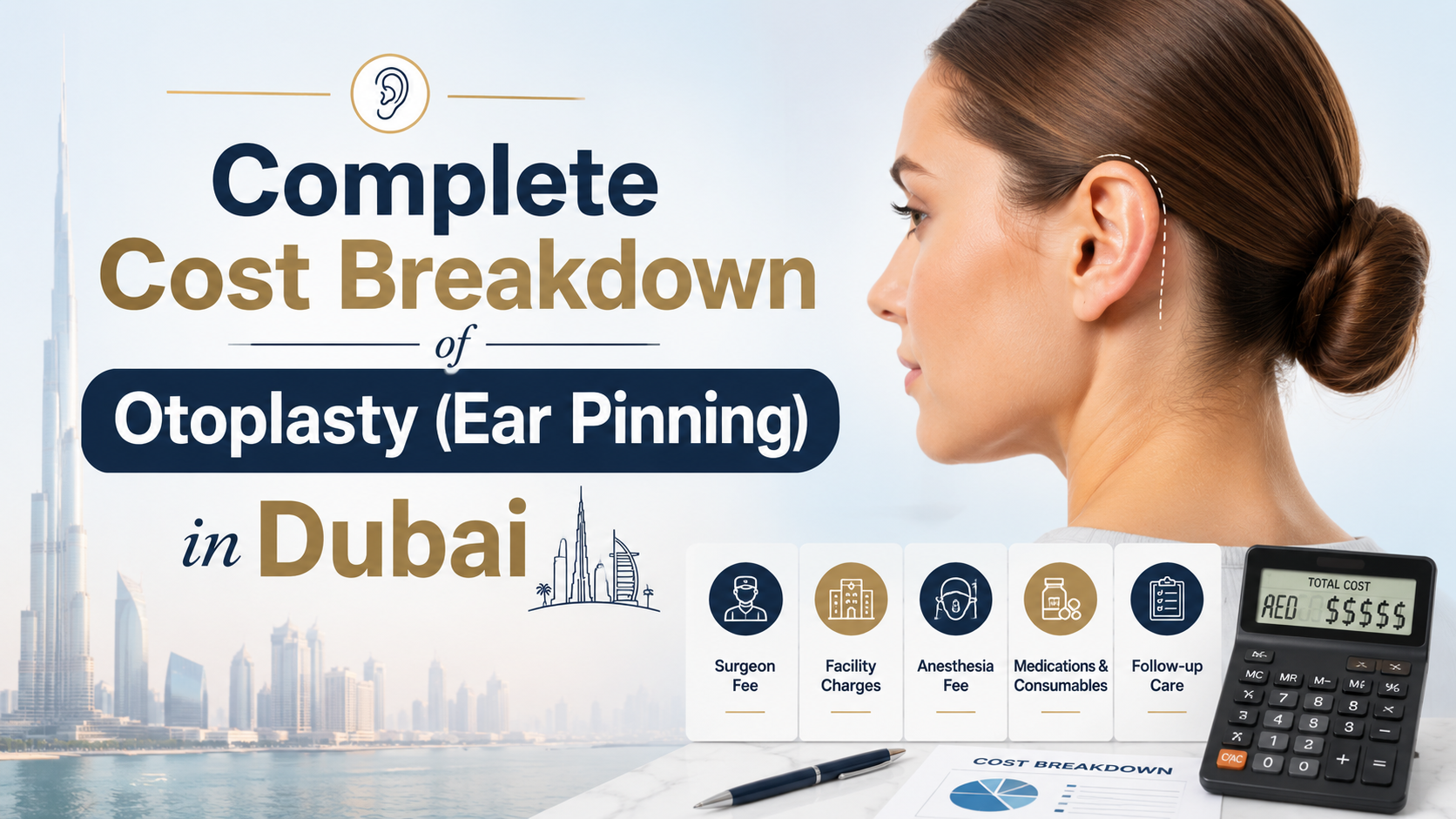
Complete Cost Breakdown of Otoplasty in Dubai
The overall cost often consists of several separate components.
1. Initial Consultation Fee
The consultation typically includes:
- Medical history review
- Physical examination
- Surgical assessment
- Discussion of goals and expectations
Estimated range:
| Service | Typical Cost Range |
|---|---|
| Initial consultation | AED 300–1,500+ |
Some clinics deduct consultation fees from the final surgical cost.
2. Surgeon’s Professional Fee
This is usually the largest component of the total price.
Factors influencing surgeon fees include:
- Board certification
- Years of experience
- Specialized facial plastic surgery training
- Reputation and demand
- Case complexity
Estimated range:
| Component | Estimated Cost |
|---|---|
| Surgeon fee | AED 6,000–18,000+ |
3. Anesthesia Costs
Otoplasty may be performed under:
- Local anesthesia
- Local anesthesia with sedation
- General anesthesia
Estimated range:
| Anesthesia Type | Estimated Cost |
|---|---|
| Local anesthesia | AED 1,000–3,000 |
| Sedation | AED 2,000–5,000 |
| General anesthesia | AED 3,000–8,000+ |
4. Operating Facility Charges
These fees cover:
- Surgical suite use
- Nursing support
- Monitoring equipment
- Recovery room services
Estimated range:
| Facility Type | Estimated Cost |
|---|---|
| Day surgery center | AED 2,000–6,000 |
| Private hospital | AED 4,000–10,000+ |
5. Laboratory and Preoperative Testing
Patients may require:
- Blood tests
- Medical clearance
- Additional investigations if indicated
Estimated range:
| Service | Estimated Cost |
|---|---|
| Preoperative testing | AED 300–2,000+ |
6. Medications
Postoperative medications may include:
- Pain relievers
- Antibiotics when indicated
- Anti-inflammatory medications
Estimated range:
| Item | Estimated Cost |
|---|---|
| Medications | AED 100–800+ |
7. Compression Headbands and Dressings
After surgery, patients often use:
- Protective dressings
- Compression headbands
- Wound care supplies
Estimated range:
| Item | Estimated Cost |
|---|---|
| Postoperative supplies | AED 100–1,000+ |
8. Follow-Up Appointments
Follow-up visits may include:
- Wound evaluation
- Suture assessment
- Recovery monitoring
Some packages include these visits, while others bill separately.
Estimated range:
| Service | Estimated Cost |
|---|---|
| Follow-up care | AED 0–2,000+ |
Estimated Total Otoplasty Cost in Dubai
| Procedure Type | Typical Overall Range |
|---|---|
| Standard ear pinning | AED 10,000–20,000+ |
| Complex reshaping | AED 15,000–25,000+ |
| Revision otoplasty | AED 15,000–30,000+ |
| Reconstructive procedures | Variable and often higher |
Actual costs vary substantially depending on individual circumstances.
Factors That Influence Pricing
Surgeon Experience
Highly experienced surgeons often charge more due to:
- Specialized expertise
- Established track records
- Advanced techniques
Complexity of the Procedure
More extensive cartilage reshaping generally increases:
- Operative time
- Technical difficulty
- Recovery requirements
Facility Type
Premium hospitals may charge more than outpatient surgical centers.
Anesthesia Requirements
General anesthesia typically increases total procedural expenses.
Revision Surgery
Corrective procedures are often more complex than primary surgery and may cost more.
Diagnosis and Preoperative Evaluation
Before surgery, the surgeon typically assesses:
- Ear anatomy
- Cartilage thickness
- Symmetry
- Skin quality
- Medical history
- Surgical goals
Photographic analysis may also be performed for treatment planning.
Differential Diagnosis
Not all ear appearance concerns require otoplasty.
| Condition | Key Features |
|---|---|
| Prominent ears | Increased projection from head |
| Ear asymmetry | Unequal ear position or shape |
| Congenital deformity | Structural abnormality from birth |
| Traumatic deformity | Appearance changes after injury |
| Keloid formation | Raised scar tissue affecting ear contour |
| Previous surgical changes | Altered anatomy after prior procedures |
Treatment Options
Traditional Otoplasty
Most commonly performed approach involving:
- Cartilage reshaping
- Ear repositioning
- Permanent suturing techniques
Cartilage-Sparing Techniques
Selected patients may be candidates for less extensive cartilage modification.
Reconstructive Procedures
Used for:
- Congenital abnormalities
- Trauma-related defects
- Complex anatomical concerns
Medication Considerations
Patients should discuss:
- Blood thinners
- Antiplatelet medications
- Herbal supplements
- Anti-inflammatory drugs
- Chronic prescription medications
Medication management should always follow physician guidance.
Side Effects and Risks
Potential risks include:
| Risk | Description |
|---|---|
| Swelling | Common during early recovery |
| Bruising | Usually temporary |
| Pain or discomfort | Often improves gradually |
| Infection | Uncommon but possible |
| Bleeding | May require medical attention |
| Scarring | Usually concealed behind the ear |
| Asymmetry | Results may not be perfectly symmetrical |
| Recurrence | Ear prominence may partially return |
| Need for revision | Occasionally required |
No cosmetic procedure can guarantee a specific aesthetic outcome.
Prevention Guidance
While prominent ears generally cannot be prevented, patients can reduce complications by:
- Selecting qualified surgeons
- Following postoperative instructions
- Attending follow-up visits
- Avoiding trauma during recovery
- Using recommended protective garments
Prognosis and Recovery
Most patients can expect:
| Recovery Stage | Typical Expectations |
|---|---|
| First few days | Swelling and mild discomfort |
| First week | Dressing removal in many cases |
| 2–4 weeks | Gradual improvement in appearance |
| Several months | Continued refinement of results |
| Long term | Generally stable outcomes |
Healing timelines vary among individuals.
Emergency Warning Signs
Patients should seek prompt medical attention for:
- Severe or worsening pain
- Excessive bleeding
- Fever
- Significant redness spreading around the incision
- Sudden swelling
- Drainage suggesting infection
- Signs of allergic reaction
- Difficulty breathing
Emergency symptoms require immediate medical assessment.
Evidence-Based Insights
Current clinical experience suggests that otoplasty can effectively improve ear prominence and patient satisfaction when performed in appropriate candidates. However:
- Outcomes depend heavily on surgical technique.
- Individual healing responses vary.
- Revision procedures may occasionally be necessary.
- Long-term satisfaction is influenced by realistic expectations.
Patients should review potential benefits and risks with a qualified surgeon before proceeding.
Clinical Comparison Table
Otoplasty vs Non-Surgical Cosmetic Approaches
| Feature | Otoplasty | Non-Surgical Approaches |
|---|---|---|
| Permanent structural change | Usually yes | Usually no |
| Cartilage reshaping | Yes | No |
| Recovery period | Required | Minimal |
| Surgical risks | Present | Lower |
| Suitable for significant prominence | Often yes | Usually limited |
| Revision possibility | Yes | Sometimes |
Expert-Level FAQs
How much does ear pinning surgery cost in Dubai?
Most patients encounter total costs ranging from approximately AED 10,000 to AED 30,000 or more depending on complexity, facility, and surgeon expertise.
Is otoplasty covered by health insurance?
Cosmetic otoplasty is often not covered. Coverage may differ when surgery is medically necessary or reconstructive in nature.
How long does otoplasty surgery take?
Many procedures take between one and three hours, though timing varies by complexity.
At what age can otoplasty be performed?
Many surgeons consider candidates after the ears have reached sufficient developmental maturity, often during childhood or adolescence.
Is otoplasty painful?
Patients commonly experience temporary discomfort, swelling, and tenderness that generally improve during recovery.
Can prominent ears return after surgery?
Partial recurrence is possible in some cases, although many patients experience long-lasting results.
How soon can I return to work?
Many adults return to non-strenuous activities within approximately one to two weeks, depending on recovery progress.
Will there be visible scars?
Incisions are frequently placed behind the ears where scars are often less noticeable after healing.
Is revision otoplasty more expensive?
Revision procedures are often more technically demanding and may cost more than primary surgery.
Suggested Internal Linking Opportunities
- Ear reconstruction surgery guide
- Facial plastic surgery procedures
- Cosmetic surgery consultation preparation
- Recovery after aesthetic surgery
- Scar management after surgery
- Revision cosmetic surgery overview
- Surgical risk and complication education
- Choosing a qualified plastic surgeon
Conclusion
Otoplasty remains one of the most effective surgical options for correcting prominent or asymmetrical ears. In Dubai, total treatment costs vary widely based on surgeon qualifications, facility selection, anesthesia requirements, procedural complexity, and postoperative care needs.
Rather than focusing exclusively on price, patients should evaluate surgical experience, safety standards, realistic expectations, and long-term outcomes. A comprehensive consultation can help clarify candidacy, anticipated results, recovery requirements, and the full financial commitment associated with treatment.
Medical Disclaimer
This article is intended for educational and informational purposes only and should not be considered medical advice, diagnosis, or treatment. Otoplasty suitability, risks, outcomes, and costs vary between individuals. Patients should consult a qualified healthcare professional or board-certified surgeon for personalized evaluation and recommendations.
Leave a Reply