Introduction
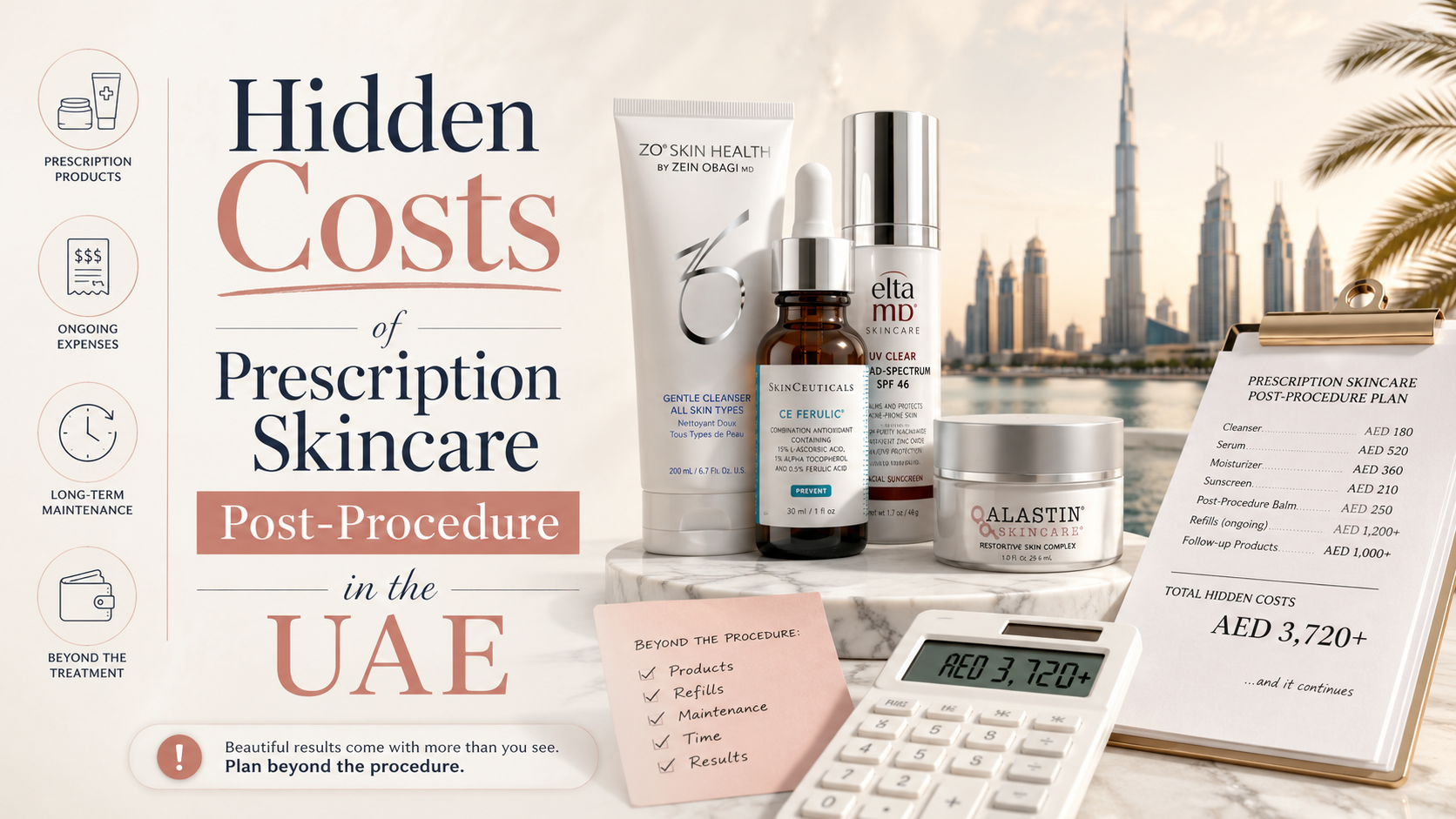
Many patients carefully budget for cosmetic dermatology procedures such as laser resurfacing, chemical peels, microneedling, acne scar treatments, pigmentation correction, and injectable procedures. However, a significant portion of the total cost often emerges after the procedure itself.
Prescription skincare is frequently recommended during recovery and long-term maintenance. These products may include topical retinoids, antibiotics, corticosteroids, pigment-control agents, barrier-repair formulations, and other dermatologist-prescribed treatments. While these medications can support healing and improve outcomes, they may add substantial ongoing expenses that are not always included in initial treatment quotes.
Understanding these hidden costs helps patients make informed financial decisions and avoid unexpected treatment interruptions.
Featured Snippet Answer
What are the hidden costs of prescription skincare after cosmetic procedures in the UAE?
Hidden costs may include prescription medications, follow-up consultations, compounded formulations, maintenance skincare, treatment of side effects, sun-protection products, repeat prescriptions, laboratory monitoring for certain medications, and long-term management of skin conditions. These expenses can significantly increase the overall cost of aesthetic treatment beyond the procedure itself.
Key Takeaways
- Post-procedure skincare expenses often continue for weeks or months.
- Prescription products may require repeat purchases.
- Follow-up consultations may be billed separately.
- Sun protection and barrier-repair products can become recurring costs.
- Complications may require additional prescriptions and visits.
- Cosmetic-related prescriptions are often not covered by health insurance.
- Long-term maintenance therapy can exceed initial recovery costs.
Why Prescription Skincare Is Common After Cosmetic Procedures
Many aesthetic procedures temporarily disrupt the skin barrier. Dermatologists frequently prescribe medications to:
- Reduce inflammation
- Prevent infection
- Control pigmentation changes
- Accelerate healing
- Minimize scarring
- Improve procedural outcomes
- Maintain long-term results
These prescriptions may be medically appropriate but can add meaningful costs over time.
Common Post-Procedure Symptoms Requiring Prescription Management
| Symptom | Potential Management |
|---|---|
| Redness | Anti-inflammatory treatments |
| Swelling | Short-term medications |
| Hyperpigmentation | Pigment-control agents |
| Acne flare-ups | Prescription acne therapies |
| Irritation | Barrier-repair treatments |
| Infection risk | Antibiotics when indicated |
| Excessive inflammation | Carefully supervised corticosteroids |
Not every patient requires medication, and treatment plans vary considerably.
Causes of Increased Prescription Skincare Costs
Extended Recovery Periods
Recovery sometimes lasts longer than anticipated. Patients may require additional medication refills beyond the initial treatment plan.
Chronic Skin Conditions
Underlying conditions such as:
- Acne
- Rosacea
- Melasma
- Eczema
- Seborrheic dermatitis
can complicate recovery and increase prescription needs.
Aggressive Procedures
More intensive procedures often require more extensive aftercare.
Examples include:
- Fractional laser resurfacing
- Deep chemical peels
- Surgical scar revision
- Combination treatment protocols
Prevention of Pigmentation
Pigmentation concerns are particularly relevant in populations with medium to darker skin tones. Dermatologists may recommend prolonged use of pigment-regulating medications after treatment.
Risk Factors for Higher Post-Procedure Expenses
Patients may face greater skincare costs if they have:
- History of hyperpigmentation
- Sensitive skin
- Chronic acne
- Rosacea
- Autoimmune skin conditions
- Previous poor wound healing
- Multiple cosmetic procedures
- Significant sun exposure
Diagnosis and Follow-Up Monitoring
Post-procedure care frequently includes follow-up assessments.
These visits may evaluate:
- Healing progression
- Infection risk
- Pigmentation changes
- Scarring
- Treatment response
- Medication tolerance
Some clinics include limited follow-up visits, while others bill separately.
Differential Diagnosis of Post-Procedure Skin Changes
Not all post-treatment symptoms represent normal healing.
| Finding | Possible Causes |
|---|---|
| Persistent redness | Normal healing, dermatitis, infection |
| Darkening skin | Post-inflammatory hyperpigmentation |
| New acne | Procedure-related flare, medication effect |
| Excessive swelling | Inflammation, allergy, infection |
| Persistent irritation | Contact dermatitis, barrier dysfunction |
| Delayed healing | Infection, underlying medical conditions |
Proper diagnosis can prevent unnecessary treatment costs.
Hidden Cost Categories Patients Often Overlook
Prescription Retinoids
Retinoid medications may be recommended for:
- Acne management
- Texture improvement
- Pigmentation control
- Long-term maintenance
These often require ongoing purchasing.
Pigmentation Treatments
Commonly prescribed for:
- Melasma
- Post-inflammatory hyperpigmentation
- Uneven skin tone
Long-term use may be necessary under medical supervision.
Barrier-Repair Products
While not always prescription-only, many dermatologist-recommended products are premium medical-grade formulations that can become recurring expenses.
Antibiotics
When indicated, topical or oral antibiotics add to treatment costs and may require monitoring.
Sun Protection Products
High-quality broad-spectrum sunscreen is frequently considered essential after many dermatologic procedures.
Patients may underestimate how often these products require replacement.
Compounded Medications
Some clinics prescribe customized formulations.
These may:
- Not be universally available
- Cost more than standard products
- Require repeat compounding
Medication Considerations
Topical Retinoids
Potential considerations:
- Skin irritation
- Dryness
- Sun sensitivity
- Need for gradual introduction
Hydroquinone and Pigment-Modifying Agents
May require:
- Dermatologist supervision
- Periodic reassessment
- Treatment breaks
Oral Medications
Certain oral therapies may require:
- Medical screening
- Laboratory monitoring
- Follow-up appointments
Requirements vary according to medication and patient health status.
Side Effects and Additional Costs
Treatment-related side effects may create further expenses.
| Side Effect | Potential Additional Cost |
|---|---|
| Dryness | Moisturizers and barrier creams |
| Irritation | Follow-up consultations |
| Contact dermatitis | Prescription treatments |
| Acne flare | Additional medications |
| Pigmentation changes | Corrective therapies |
| Infection | Medical treatment and monitoring |
Treatment Options for Cost Management
Discuss Total Aftercare Costs Upfront
Patients should ask:
- What prescriptions are likely?
- How long will treatment continue?
- Are refills commonly required?
- Are alternatives available?
Request a Full Recovery Budget
A comprehensive estimate should ideally include:
- Procedure fee
- Follow-up visits
- Prescription medications
- Skincare products
- Sunscreens
- Potential maintenance therapy
Consider Long-Term Maintenance Requirements
Some procedures require ongoing skincare to maintain results.
Without maintenance, outcomes may diminish over time.
Prevention Strategies
Patients may reduce unexpected expenses by:
- Following recovery instructions carefully
- Using prescribed medications correctly
- Avoiding excessive sun exposure
- Attending scheduled follow-ups
- Reporting complications early
- Maintaining realistic expectations
Prevention is often less costly than managing complications.
Prognosis and Long-Term Expectations
Most patients recover successfully when appropriate aftercare is followed.
However, long-term maintenance is common after:
- Pigmentation treatments
- Acne treatments
- Anti-aging procedures
- Laser resurfacing
- Scar management
The procedure itself may represent only part of the total investment.
Emergency Warning Signs
Patients should seek prompt medical evaluation if they experience:
- Rapidly worsening redness
- Severe swelling
- Fever
- Pus or drainage
- Significant pain
- Vision changes after facial procedures
- Signs of allergic reaction
Urgent assessment can reduce the risk of serious complications.
Evidence-Based Insights
Current dermatology practice generally recognizes that procedural outcomes depend heavily on post-treatment care. While procedures often receive the most attention during treatment planning, recovery protocols, sun protection, and ongoing skin management substantially influence both outcomes and overall costs.
Importantly, the exact skincare regimen varies between patients, procedures, skin types, and physician preferences. No single prescription plan is appropriate for everyone.
Clinical Comparison Table
Procedure Cost vs. Potential Aftercare Burden
| Procedure Type | Typical Aftercare Intensity | Likelihood of Prescription Skincare |
|---|---|---|
| Light chemical peel | Low | Low to moderate |
| Microneedling | Moderate | Moderate |
| Fractional laser | High | High |
| Pigmentation treatment | Moderate to high | High |
| Acne scar treatment | Moderate to high | High |
| Deep resurfacing procedures | High | High |
Frequently Asked Questions
Are prescription skincare costs usually included in cosmetic procedure pricing?
Not always. Some clinics bundle limited aftercare products, while others charge separately for medications and follow-up care.
Does UAE health insurance cover post-procedure prescription skincare?
Coverage varies. Cosmetic treatments and related skincare products are often excluded, but medically necessary treatments may be evaluated differently depending on the policy.
Why do dermatologists prescribe skincare after procedures?
Prescription products may support healing, reduce complications, manage pigmentation, and help maintain results.
Can I replace prescription products with over-the-counter alternatives?
Only after discussing options with your treating physician. Some prescriptions serve specific medical purposes that over-the-counter products may not adequately address.
How long might post-procedure skincare continue?
It depends on the procedure and the patient’s skin condition. Some regimens last weeks, while others continue for months.
Are expensive medical-grade products always necessary?
Not necessarily. Recommendations vary based on clinical needs, and patients can discuss alternative options with their dermatologist.
What hidden expense surprises patients most often?
Recurring purchases of prescription products, maintenance therapy, sunscreen, and follow-up appointments are among the most commonly overlooked costs.
Can complications increase post-procedure expenses?
Yes. Infections, pigmentation changes, irritation, and delayed healing may require additional treatment and monitoring.
Suggested Internal Linking Opportunities
- Guide to laser resurfacing recovery
- Understanding post-inflammatory hyperpigmentation
- Sunscreen selection after cosmetic procedures
- Managing acne after dermatologic treatments
- Chemical peel aftercare recommendations
- Microneedling recovery timeline
- When to see a dermatologist for skin irritation
Conclusion
The true financial impact of cosmetic dermatology procedures in the UAE often extends beyond the treatment room. Prescription skincare, follow-up appointments, maintenance therapy, sun protection, and management of potential complications can significantly increase overall costs. Patients who understand these factors before treatment are better positioned to budget effectively, maintain treatment adherence, and achieve safer long-term outcomes.
Medical Disclaimer
This article is for educational purposes only and should not be considered medical advice. Treatment decisions should be made in consultation with a qualified dermatologist or healthcare professional. Costs, medication requirements, insurance coverage, and recovery protocols vary among patients, clinics, procedures, and geographic locations. Individual medical evaluation is essential before starting or modifying any treatment plan.
Leave a Reply