Introduction
Home nursing has become an increasingly important component of chronic disease management across the UAE. Patients living with conditions such as stroke-related disability, advanced neurological disorders, chronic respiratory disease, heart failure, diabetes complications, cancer, and age-related frailty often benefit from receiving care in the comfort of their homes.
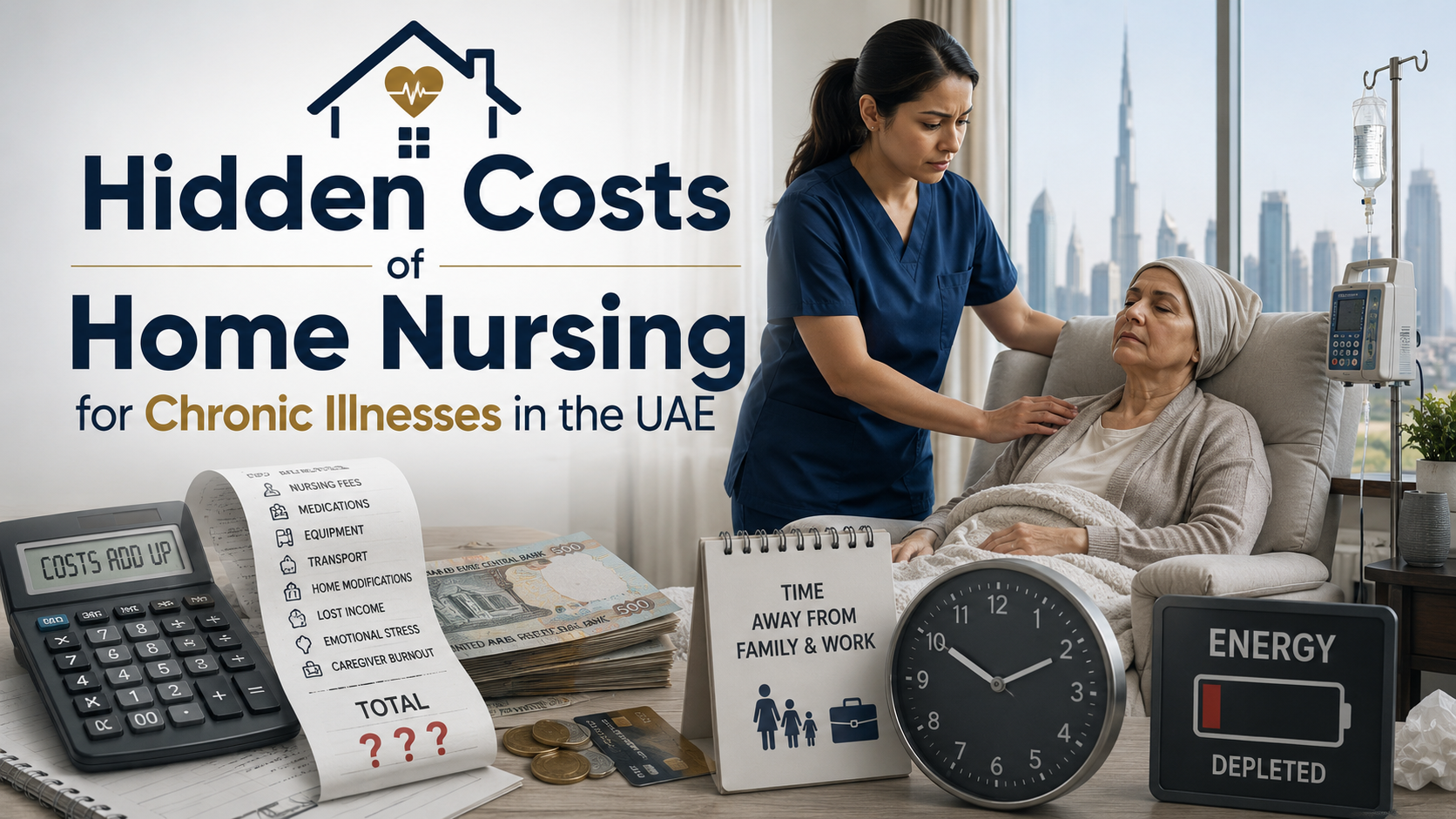
While families frequently focus on nursing agency fees when budgeting for home healthcare, the total financial burden can be substantially higher. Hidden or overlooked costs—including medical equipment, consumable supplies, transportation, caregiver turnover, emergency interventions, and insurance limitations—can significantly affect long-term affordability.
Understanding these expenses helps families make informed decisions, avoid unexpected financial strain, and create realistic care plans that support both patient wellbeing and household stability.
Featured Snippet Answer
What are the hidden costs of home nursing for chronic illnesses in the UAE?
Hidden costs of home nursing in the UAE may include medical equipment rentals, wound-care supplies, medications, physician home visits, transportation fees, emergency hospital admissions, insurance exclusions, caregiver replacement expenses, rehabilitation services, and home modifications. These additional costs can substantially increase the total expense of long-term chronic illness management beyond standard nursing service fees.
Key Takeaways
- Home nursing expenses often extend far beyond hourly or monthly nursing rates.
- Medical supplies and durable equipment can become significant recurring costs.
- Insurance coverage for long-term home healthcare varies widely among policies.
- Chronic illnesses frequently require multidisciplinary support beyond nursing care.
- Emergency hospitalizations can create unexpected financial burdens.
- Home modifications may be necessary for patient safety and mobility.
- Long-term financial planning is essential for families managing chronic disease.
Understanding Home Nursing for Chronic Illnesses
Home nursing services typically support patients with:
- Stroke-related disabilities
- Parkinson’s disease
- Alzheimer’s disease and other dementias
- Multiple sclerosis
- Advanced diabetes complications
- Chronic obstructive pulmonary disease (COPD)
- Heart failure
- Cancer-related care needs
- Neuromuscular disorders
- Post-surgical recovery requiring prolonged support
Services may include:
- Medication administration
- Vital sign monitoring
- Wound management
- Catheter care
- Mobility assistance
- Feeding tube support
- Chronic disease monitoring
- Patient and caregiver education
Common Symptoms That Increase Home Nursing Needs
The need for home nursing often increases when chronic illnesses cause functional impairment.
| Symptom | Potential Impact on Care Needs |
|---|---|
| Reduced mobility | Assistance with transfers and movement |
| Breathing difficulties | Monitoring and respiratory support |
| Cognitive decline | Supervision and safety monitoring |
| Chronic wounds | Regular dressing changes |
| Severe fatigue | Assistance with daily activities |
| Swallowing difficulties | Feeding support and monitoring |
| Frequent infections | Enhanced clinical oversight |
| Medication complexity | Skilled nursing administration |
Causes of Rising Home Nursing Costs
Several factors contribute to escalating home care expenses.
Increasing Medical Complexity
Patients with multiple chronic conditions often require:
- More frequent nursing visits
- Specialized clinical skills
- Advanced monitoring
- Coordination with multiple specialists
Longer Survival with Chronic Disease
Advances in healthcare have improved life expectancy, but many patients live longer with ongoing care needs.
Workforce and Staffing Requirements
Highly trained nurses may command higher fees, particularly when specialized expertise is needed for:
- Ventilator care
- Tracheostomy management
- Oncology support
- Neurological care
Hidden Cost Categories Families Often Overlook
Medical Supplies
Recurring expenses may include:
- Dressings
- Gloves
- Disinfectants
- Catheters
- Feeding tube supplies
- Incontinence products
- Compression garments
These costs can accumulate substantially over months or years.
Medical Equipment
Common equipment expenses include:
| Equipment | Potential Ongoing Cost Considerations |
|---|---|
| Hospital bed | Rental, maintenance, replacement |
| Wheelchair | Repairs and upgrades |
| Oxygen concentrator | Maintenance and electricity |
| Patient lift | Servicing and training |
| Pressure-relief mattress | Replacement and upkeep |
| Mobility aids | Periodic replacement |
Home Modifications
Patients with mobility limitations may require:
- Wheelchair ramps
- Bathroom adaptations
- Grab bars
- Stair lifts
- Wider doorways
- Non-slip flooring
These costs are often not included in healthcare budgets.
Transportation Expenses
Even with home nursing, patients may require:
- Specialist appointments
- Diagnostic testing
- Dialysis visits
- Rehabilitation sessions
Medical transportation services can add recurring expenses.
Risk Factors for Unexpected Financial Burden
Certain situations increase the likelihood of higher-than-expected costs.
| Risk Factor | Why Costs May Increase |
|---|---|
| Advanced neurological disease | Higher dependency levels |
| Multiple chronic illnesses | More complex care |
| Frequent hospitalizations | Repeated transitions of care |
| Limited family support | Greater reliance on paid caregivers |
| Specialized nursing needs | Higher service fees |
| Progressive disease | Increasing care intensity over time |
Diagnosis and Care Assessment
Before initiating home nursing, healthcare providers often assess:
- Functional status
- Cognitive function
- Medication requirements
- Mobility limitations
- Fall risk
- Nutritional status
- Home safety concerns
A thorough assessment helps estimate future care requirements and associated costs.
Differential Diagnosis: When Home Nursing May Not Be the Only Solution
Not all patients requiring support necessarily need full-time home nursing.
| Situation | Alternative Care Option |
|---|---|
| Mild functional limitations | Family caregiver support |
| Medication reminders only | Telehealth monitoring |
| Short-term recovery | Temporary rehabilitation services |
| Social isolation | Community support programs |
| Limited mobility | Home physiotherapy assistance |
Individual suitability should be assessed by healthcare professionals.
Treatment Options and Care Models
Intermittent Nursing Visits
Suitable for patients requiring periodic clinical support.
Advantages
- Lower overall cost
- Flexible scheduling
Limitations
- Reduced supervision
Full-Time Home Nursing
Appropriate for patients with substantial care needs.
Advantages
- Continuous monitoring
- Immediate response to issues
Limitations
- Higher financial burden
Multidisciplinary Home Care
May include:
- Nursing
- Physiotherapy
- Occupational therapy
- Nutrition support
- Palliative care
While comprehensive, this model may increase overall expenses.
Medication Considerations
Chronic illness management often involves multiple medications.
Potential cost considerations include:
- Brand versus generic options
- Specialty medications
- Injectable therapies
- Home infusion services
- Medication delivery charges
Patients should discuss medication affordability with their treating physicians.
Side Effects and Risks Associated with Long-Term Home Care
Potential challenges include:
- Caregiver fatigue
- Missed medications
- Social isolation
- Infection risks
- Falls
- Equipment-related complications
Regular reassessment helps reduce these risks.
Insurance Coverage Considerations in the UAE
Insurance coverage varies significantly between plans.
Families should verify:
- Home nursing eligibility
- Visit limits
- Pre-authorization requirements
- Excluded services
- Equipment coverage
- Rehabilitation benefits
- Chronic disease management benefits
Coverage details can change, making direct confirmation with insurers essential.
Prevention of Financial Surprises
Financial Planning Strategies
- Request detailed service quotations.
- Clarify all recurring fees.
- Review insurance policies carefully.
- Budget for emergencies.
- Anticipate future disease progression.
- Maintain contingency funds.
Care Planning Strategies
- Schedule periodic reassessments.
- Coordinate care among providers.
- Avoid unnecessary duplication of services.
- Optimize medication management.
Prognosis and Long-Term Recovery Expectations
Recovery varies considerably depending on the underlying condition.
Conditions With Potential Improvement
- Stroke rehabilitation
- Post-surgical recovery
- Certain orthopedic conditions
Conditions Requiring Progressive Care
- Advanced dementia
- Parkinson’s disease
- Progressive neurological disorders
In progressive illnesses, care requirements often increase over time, potentially raising long-term expenses.
Emergency Warning Signs
Immediate medical evaluation may be necessary if a patient experiences:
- Sudden shortness of breath
- Chest pain
- New confusion
- Severe weakness
- Uncontrolled bleeding
- High fever
- Loss of consciousness
- Seizures
- Signs of stroke
Home nursing should not replace emergency medical care when urgent symptoms occur.
Evidence-Based Insights
Current healthcare guidance consistently supports home-based care as an important option for many chronic illnesses. However, evidence also indicates that long-term care planning should consider not only direct nursing expenses but also indirect costs, caregiver burden, equipment needs, and healthcare utilization over time.
The financial impact varies substantially according to:
- Disease severity
- Functional limitations
- Care intensity
- Insurance benefits
- Family support availability
Because healthcare systems, insurers, and service providers differ, exact cost estimates should be individualized.
Clinical Comparison Table
Home Nursing vs Facility-Based Care
| Factor | Home Nursing | Facility-Based Care |
|---|---|---|
| Familiar environment | Yes | Limited |
| Family involvement | High | Variable |
| Personalization | High | Moderate |
| Equipment responsibility | Often family-managed | Usually facility-managed |
| Transportation needs | Reduced but not eliminated | Often required |
| Cost predictability | Variable | Often more structured |
| Social interaction | May be limited | Often greater |
Frequently Asked Questions
1. Is home nursing always cheaper than hospitalization in the UAE?
Not necessarily. While home care may reduce certain hospital-related expenses, additional costs such as equipment, supplies, and specialist visits can significantly increase overall spending.
2. What chronic illnesses most commonly require home nursing?
Conditions frequently associated with home nursing include stroke-related disability, advanced neurological disorders, cancer, heart failure, COPD, and severe diabetes complications.
3. Does health insurance usually cover home nursing?
Coverage varies substantially between policies. Some plans provide limited benefits, while others may exclude long-term home nursing altogether.
4. What hidden expenses surprise families most often?
Medical supplies, equipment maintenance, emergency hospital visits, transportation, and home modifications are among the most commonly overlooked costs.
5. How can families estimate future care costs?
A comprehensive assessment by healthcare professionals can help project likely care needs, although future disease progression remains difficult to predict with certainty.
6. Are home modifications medically necessary?
In some cases, yes. Safety improvements such as grab bars, ramps, and bathroom adaptations may reduce fall risk and improve independence.
7. When should a patient transition from home care to facility-based care?
This decision depends on medical complexity, safety concerns, caregiver capacity, and available resources. It should be made with guidance from healthcare professionals.
8. Can telehealth reduce home nursing expenses?
Telehealth may reduce some monitoring costs and improve access to clinicians, but it generally cannot replace hands-on nursing services when skilled care is required.
Suggested Internal Linking Opportunities
- Chronic disease management strategies
- Home healthcare services in the UAE
- Stroke rehabilitation guide
- Parkinson’s disease caregiving resources
- Understanding long-term care insurance
- Preventing falls in older adults
- Managing chronic wounds at home
- Caregiver burnout prevention
Conclusion
Home nursing can provide meaningful benefits for individuals living with chronic illnesses in the UAE, allowing care to occur in a familiar and often more comfortable environment. However, the true financial picture extends beyond nursing service fees alone. Medical equipment, consumable supplies, transportation, rehabilitation services, home modifications, insurance limitations, and emergency healthcare utilization can all contribute to substantial long-term costs.
Families who proactively evaluate these factors, clarify insurance benefits, and plan for changing care needs are generally better positioned to make informed decisions and avoid unexpected financial strain while supporting high-quality patient care.
Medical Disclaimer
This article is intended for educational purposes only and does not constitute medical, nursing, insurance, financial, or legal advice. Healthcare decisions should be made in consultation with qualified physicians, nurses, and other licensed healthcare professionals. Insurance benefits, coverage rules, and healthcare costs vary among providers and policies. Patients and families should verify current information directly with healthcare providers and insurers before making care decisions.
Leave a Reply