Introduction
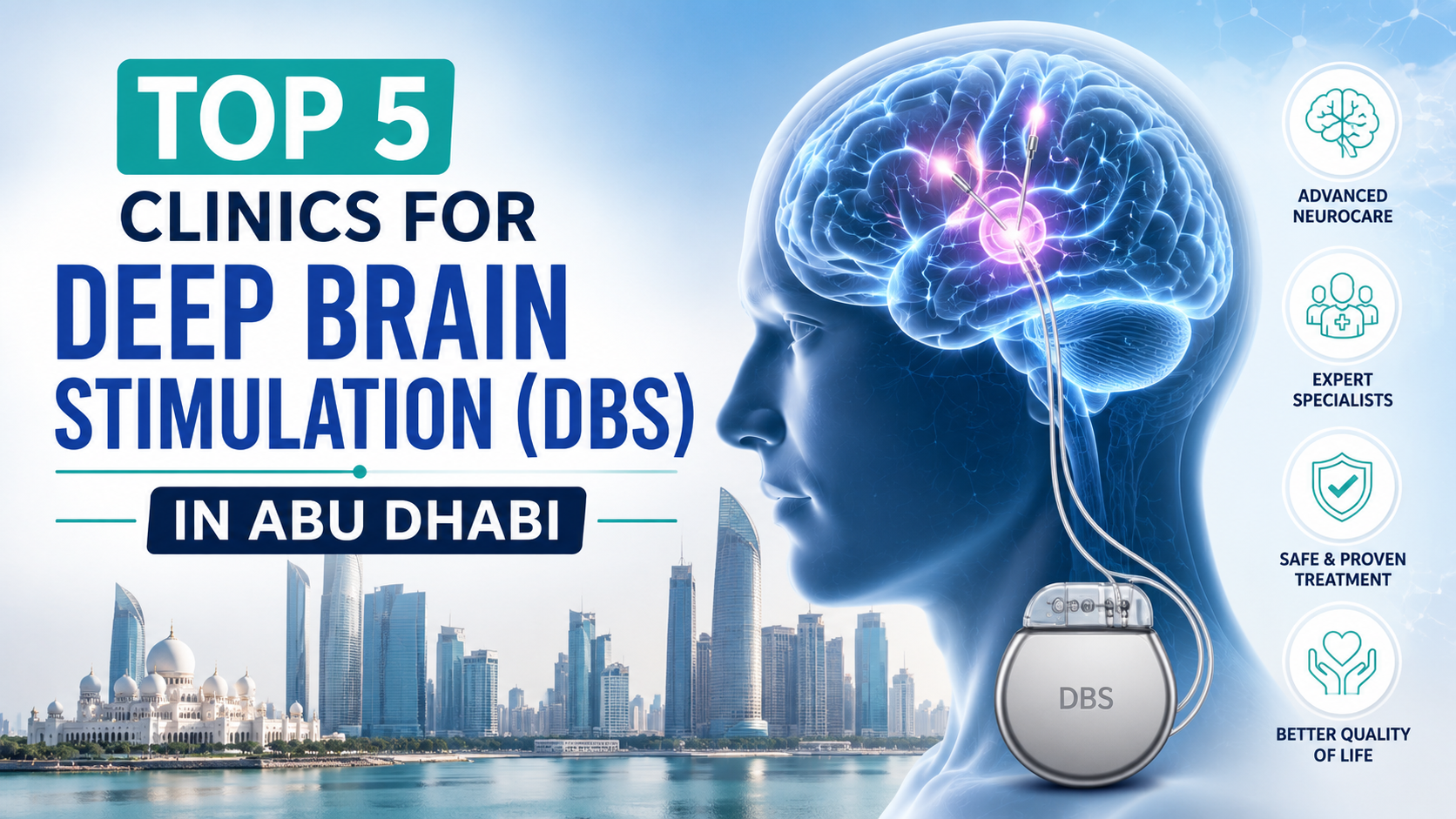
Deep Brain Stimulation (DBS) is one of the most significant advances in modern functional neurosurgery. For carefully selected patients with neurological disorders such as Parkinson’s disease, essential tremor, dystonia, and certain treatment-resistant neurological conditions, DBS may improve symptoms that are not adequately controlled with medication alone.
Patients seeking DBS treatment in Abu Dhabi often prioritize:
- Experienced functional neurosurgeons
- Multidisciplinary neurological care
- Advanced neuroimaging capabilities
- Comprehensive pre-operative evaluation
- Long-term device programming and follow-up
- International standards of patient safety
Because DBS is a highly specialized procedure, selecting the right center is often as important as selecting the procedure itself.
Featured Snippet Answer
The best clinics for Deep Brain Stimulation (DBS) in Abu Dhabi are generally those with multidisciplinary neurology and neurosurgery programs, advanced neuroimaging technology, experienced functional neurosurgeons, and dedicated long-term DBS programming services. Leading tertiary-care hospitals and neuroscience centers typically offer the most comprehensive DBS pathways for Parkinson’s disease, essential tremor, and dystonia.
Key Takeaways
- DBS is not a cure but may significantly improve symptoms in selected patients.
- Comprehensive neurological assessment is essential before surgery.
- Long-term follow-up and device programming are critical to treatment success.
- Patient selection strongly influences outcomes.
- Risks include infection, bleeding, hardware complications, and stimulation-related side effects.
- Multidisciplinary neuroscience centers generally provide the most complete DBS care.
Top 5 Clinics for Deep Brain Stimulation (DBS) in Abu Dhabi
The following institutions are widely recognized for advanced neurological and neurosurgical services and are commonly considered among the leading options for DBS evaluation and treatment in Abu Dhabi.
1. Cleveland Clinic Abu Dhabi
Why patients consider it:
- Comprehensive neuroscience institute
- Advanced movement disorder services
- Multidisciplinary neurological care
- High-level neuroimaging capabilities
- Internationally trained specialists
Potential strengths:
- Complex Parkinson’s disease management
- Functional neurosurgery expertise
- Long-term postoperative follow-up
- Rehabilitation integration
2. Sheikh Shakhbout Medical City
Why patients consider it:
- Large tertiary referral center
- Advanced neurology and neurosurgery departments
- Multispecialty care coordination
- Access to complex neurological evaluations
Potential strengths:
- Comprehensive diagnostic workups
- High-acuity neurological care
- Multidisciplinary treatment planning
3. Burjeel Medical City
Why patients consider it:
- Specialized neurosciences services
- Advanced surgical infrastructure
- Comprehensive rehabilitation support
- International patient services
Potential strengths:
- Personalized neurological treatment plans
- Movement disorder evaluations
- Modern perioperative care pathways
4. Mediclinic Airport Road Hospital
Why patients consider it:
- Established neurology services
- Access to multidisciplinary specialists
- Advanced diagnostic imaging
- Coordinated patient care
Potential strengths:
- Neurological assessment
- Long-term symptom management
- Referral pathways for advanced interventions
5. NMC Specialty Hospital Abu Dhabi
Why patients consider it:
- Comprehensive specialty care
- Neurological consultation services
- Multidisciplinary medical teams
- Accessible patient support programs
Potential strengths:
- Initial DBS eligibility assessment
- Ongoing neurological management
- Coordinated specialist referrals
What Is Deep Brain Stimulation (DBS)?
Deep Brain Stimulation is a neurosurgical procedure involving:
- Placement of electrodes in specific brain regions.
- Connection of electrodes to an implanted pulse generator.
- Delivery of controlled electrical stimulation.
- Adjustment of stimulation settings over time.
The therapy aims to regulate abnormal neural activity associated with certain neurological disorders.
Symptoms That May Lead to DBS Evaluation
| Symptom | Possible Associated Condition |
|---|---|
| Tremor | Parkinson’s disease, essential tremor |
| Muscle rigidity | Parkinson’s disease |
| Slowness of movement | Parkinson’s disease |
| Abnormal involuntary movements | Dystonia |
| Medication fluctuations | Advanced Parkinson’s disease |
| Disabling motor symptoms | Various movement disorders |
Causes of Conditions Commonly Treated With DBS
DBS does not treat a single disease. Instead, it may be used for conditions involving abnormal neural circuit activity.
Common indications include:
- Parkinson’s disease
- Essential tremor
- Dystonia
- Selected epilepsy cases
- Certain treatment-resistant neurological disorders
Eligibility depends on individual clinical circumstances and specialist evaluation.
Risk Factors for Needing Advanced Parkinson’s Therapies
Patients may be considered for DBS when they develop:
- Increasing medication requirements
- Motor fluctuations
- Wearing-off effects
- Dyskinesias
- Medication intolerance
- Progressive functional impairment
How Candidates Are Diagnosed and Evaluated
Before DBS, patients typically undergo:
Neurological Assessment
- Comprehensive symptom review
- Movement disorder evaluation
- Medication response assessment
Imaging Studies
- MRI brain
- Specialized neuroimaging when indicated
Neuropsychological Testing
- Cognitive assessment
- Memory evaluation
- Mood and behavioral screening
Multidisciplinary Review
- Neurologist
- Neurosurgeon
- Neuropsychologist
- Rehabilitation specialists
Differential Diagnosis
Several disorders can resemble Parkinson’s disease or tremor syndromes.
| Condition | Similar Symptoms | Key Distinguishing Features |
|---|---|---|
| Essential Tremor | Tremor | Often affects hands during action |
| Parkinson’s Disease | Tremor, rigidity | Rest tremor and bradykinesia |
| Multiple System Atrophy | Parkinsonian symptoms | Faster progression |
| Progressive Supranuclear Palsy | Balance issues | Characteristic eye movement abnormalities |
| Drug-Induced Parkinsonism | Slowness, rigidity | Medication-related onset |
Treatment Options
Medication Therapy
Common first-line approaches include:
- Dopaminergic medications
- Symptom-specific treatments
- Adjunctive therapies
Physical Therapy
May help improve:
- Mobility
- Balance
- Functional independence
Occupational Therapy
Supports:
- Activities of daily living
- Adaptive strategies
Deep Brain Stimulation
Potential benefits include:
- Reduced tremor
- Improved motor function
- Reduced medication burden in selected patients
- Improved quality of life for appropriate candidates
Medication Considerations
Patients undergoing DBS often continue medications, although dosages may change after surgery.
Important considerations include:
- Drug interactions
- Cognitive effects
- Blood-thinning medications
- Medication timing around surgery
Medication decisions should always be individualized by treating physicians.
Side Effects and Risks of DBS
Surgical Risks
- Infection
- Bleeding
- Stroke
- Hardware complications
Device-Related Risks
- Lead migration
- Battery depletion
- Device malfunction
Stimulation-Related Effects
- Speech changes
- Balance difficulties
- Tingling sensations
- Mood changes
Risk levels vary depending on individual health status and surgical complexity.
Prevention Guidance
While DBS-treated disorders cannot always be prevented, patients may reduce complications through:
- Regular neurological follow-up
- Medication adherence
- Fall prevention strategies
- Physical activity when appropriate
- Management of cardiovascular risk factors
Prognosis and Recovery
Recovery typically occurs in stages.
| Phase | What to Expect |
|---|---|
| Immediate postoperative period | Surgical recovery |
| First programming sessions | Adjustment of stimulation settings |
| First few months | Optimization of symptom control |
| Long-term follow-up | Periodic device adjustments |
Outcomes vary considerably between individuals.
Emergency Warning Signs
Seek urgent medical attention for:
- Sudden severe headache
- New weakness
- Loss of consciousness
- Seizures
- Significant confusion
- Signs of infection around the device
- Rapid neurological deterioration
Evidence-Based Insights
Current clinical evidence supports DBS as an established treatment option for selected patients with:
- Parkinson’s disease
- Essential tremor
- Dystonia
Research continues to evaluate its role in:
- Epilepsy
- Psychiatric disorders
- Other neurological conditions
Not every patient experiences the same degree of improvement, and outcomes depend heavily on diagnosis, disease stage, surgical accuracy, and postoperative programming.
Clinical Comparison Table
| Factor | Medication Alone | DBS Plus Medical Therapy |
|---|---|---|
| Invasiveness | Non-surgical | Surgical |
| Reversibility | Medication adjustments | Device can often be adjusted or removed |
| Tremor Control | Variable | May improve substantially in selected patients |
| Long-Term Management | Ongoing medication adjustments | Requires programming and monitoring |
| Candidate Selection | Broad | Highly selective |
Frequently Asked Questions
1. Who is a good candidate for DBS?
Patients with specific neurological disorders whose symptoms remain inadequately controlled despite optimized medical therapy may be candidates after comprehensive specialist evaluation.
2. Is DBS a cure for Parkinson’s disease?
No. DBS helps manage symptoms but does not cure or stop disease progression.
3. How long does DBS surgery take?
Procedure length varies depending on surgical technique, complexity, and patient-specific factors.
4. Can DBS reduce medication requirements?
Some patients may require lower medication doses after successful DBS, though many continue taking medications.
5. What is the recovery time after DBS?
Initial recovery often occurs over weeks, while stimulation optimization may take several months.
6. How often does the device require adjustment?
Programming frequency varies, particularly during the first months after implantation.
7. What are the most common risks?
Potential risks include infection, bleeding, hardware complications, and stimulation-related side effects.
8. Is age a barrier to DBS?
Age alone is not necessarily an exclusion criterion. Overall health, cognition, and functional status are important considerations.
9. Will insurance cover DBS in Abu Dhabi?
Coverage varies by insurer, policy terms, medical necessity criteria, and preauthorization requirements.
Suggested Internal Links
- Parkinson’s Disease Treatment Guide
- Essential Tremor Management Options
- Neurological Rehabilitation After Surgery
- Understanding Movement Disorders
- MRI Safety and Neurological Imaging
- Neurosurgery Consultation Checklist
- Managing Advanced Parkinson’s Disease
Conclusion
Deep Brain Stimulation remains one of the most important treatment advances for selected patients with movement disorders and other neurological conditions. In Abu Dhabi, leading tertiary-care neuroscience centers offer comprehensive DBS pathways that combine advanced diagnostics, experienced multidisciplinary teams, functional neurosurgery expertise, and long-term device management.
When evaluating potential clinics, patients should focus not only on surgical capabilities but also on the quality of neurological assessment, postoperative programming, rehabilitation support, and long-term follow-up care. Careful patient selection remains the foundation of successful DBS outcomes.
Medical Disclaimer
This article is intended for educational purposes only and should not be considered medical advice, diagnosis, or treatment. Deep Brain Stimulation is a complex medical intervention that requires individualized assessment by qualified neurologists, neurosurgeons, and multidisciplinary healthcare professionals. Patients experiencing neurological symptoms should seek evaluation from an appropriately licensed healthcare provider before making treatment decisions.
Leave a Reply