Introduction
CAR T-cell therapy has transformed the treatment landscape for certain blood cancers that do not respond adequately to conventional therapies. As advanced cellular immunotherapy becomes increasingly available across the Gulf region, patients and families in the United Arab Emirates often seek practical guidance on eligibility, referral requirements, treatment centers, costs, and expected outcomes.
Unlike standard chemotherapy or radiation therapy, CAR T-cell therapy involves collecting a patient’s immune cells, genetically modifying them to recognize cancer cells, and reinfusing them to target malignant cells more effectively.
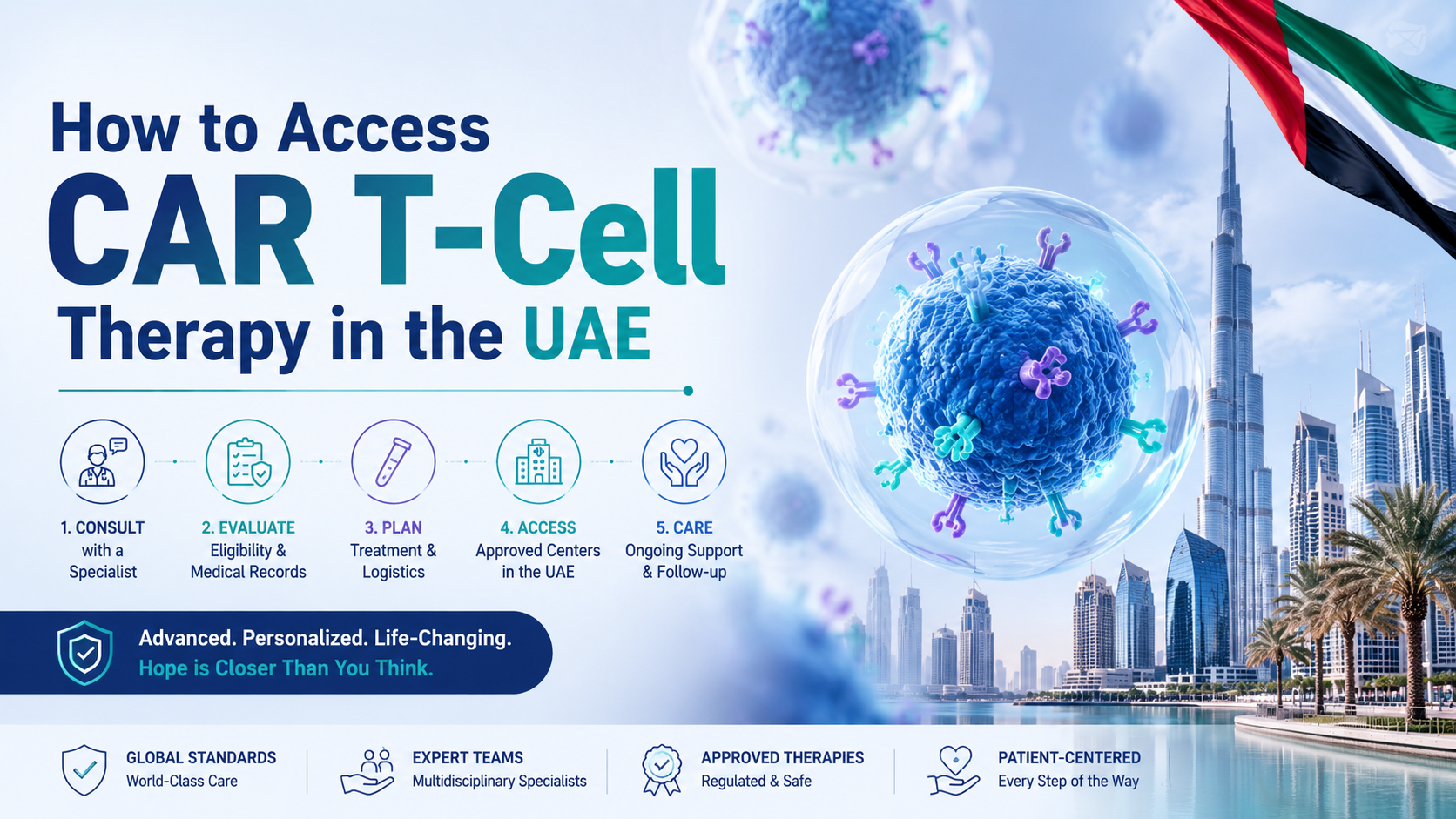
Accessing CAR T-cell therapy in the UAE can involve multiple steps, including specialist evaluation, disease confirmation, multidisciplinary review, treatment authorization, and close post-treatment monitoring.
Featured Snippet Answer
CAR T-cell therapy in the UAE is typically accessed through referral to a specialized hematology-oncology center that offers advanced cellular therapies. Patients undergo eligibility assessment, disease-specific testing, review by a multidisciplinary team, and evaluation for potential risks and benefits. Access may depend on the cancer type, prior treatments received, clinical eligibility criteria, treatment availability, and insurance or funding arrangements.
Key Takeaways
- CAR T-cell therapy is primarily used for specific blood cancers.
- Eligibility depends on diagnosis, prior treatments, overall health, and disease status.
- Patients generally require referral from a hematologist or oncologist.
- Treatment involves cell collection, laboratory modification, reinfusion, and intensive monitoring.
- Potential complications include cytokine release syndrome and neurologic toxicity.
- Not all patients qualify for CAR T-cell therapy.
- Costs can be substantial and funding pathways vary.
- Long-term follow-up is essential after treatment.
What Is CAR T-Cell Therapy?
CAR T-cell therapy stands for Chimeric Antigen Receptor T-cell therapy, a form of personalized immunotherapy.
The process involves:
- Collecting T cells from the patient.
- Engineering the cells in a specialized laboratory.
- Training them to recognize cancer-specific targets.
- Expanding the modified cells.
- Reinfusing them into the patient.
These engineered immune cells can then identify and attack certain cancer cells more effectively.
Conditions Commonly Treated With CAR T-Cell Therapy
CAR T-cell therapy is generally approved for selected hematologic malignancies.
| Condition | Potential Role of CAR T-Cell Therapy |
|---|---|
| Diffuse large B-cell lymphoma | May be used in relapsed or refractory disease |
| Acute lymphoblastic leukemia | Used in selected eligible patients |
| Follicular lymphoma | May be considered in certain circumstances |
| Mantle cell lymphoma | Available for some eligible patients |
| Multiple myeloma | Certain CAR T-cell products may be options |
| Other blood cancers | Access may occur through clinical trials or emerging indications |
Availability and approved indications may evolve as regulatory approvals and evidence continue to develop.
Symptoms That May Lead to Evaluation
Symptoms depend on the underlying cancer rather than the CAR T-cell therapy itself.
Common symptoms include:
- Persistent fatigue
- Unexplained weight loss
- Night sweats
- Enlarged lymph nodes
- Frequent infections
- Bone pain
- Easy bruising
- Abnormal blood counts
- Fever without obvious cause
These symptoms are not specific to cancers treated with CAR T-cell therapy and require medical assessment.
Causes and Disease Background
CAR T-cell therapy is not designed to treat the cause of cancer but rather to target cancer cells after diagnosis.
The cancers most commonly treated with CAR T-cell therapy arise from:
- Genetic mutations in blood-forming cells
- Abnormal immune cell proliferation
- Bone marrow disorders
- Complex interactions between genetics and environmental factors
In most cases, no single cause can be identified.
Risk Factors for Needing CAR T-Cell Therapy
Patients may be considered for CAR T-cell therapy when:
- Cancer returns after treatment
- Standard therapies fail
- Disease becomes resistant to medications
- Multiple treatment lines have been exhausted
- Relapse occurs after stem cell transplantation
Risk factors for treatment eligibility assessment include:
| Factor | Why It Matters |
|---|---|
| Cancer subtype | Determines potential eligibility |
| Disease stage | Influences treatment planning |
| Prior therapies | Helps determine next-line options |
| Organ function | Important for treatment safety |
| Performance status | Assesses ability to tolerate treatment |
| Infection status | Reduces risk of complications |
How to Access CAR T-Cell Therapy in the UAE
Step 1: Obtain Specialist Referral
Most patients begin with consultation from a:
- Hematologist
- Medical oncologist
- Cancer center specialist
The physician evaluates whether CAR T-cell therapy may be appropriate.
Step 2: Confirm Diagnosis
Patients usually require:
- Pathology review
- Bone marrow assessment when indicated
- Molecular testing
- Imaging studies
- Laboratory evaluation
Step 3: Multidisciplinary Team Review
Many advanced cancer centers use multidisciplinary tumor boards to evaluate:
- Disease characteristics
- Previous treatments
- Expected benefits
- Potential risks
Step 4: Eligibility Assessment
Clinicians assess:
- Cardiac function
- Kidney function
- Liver function
- Lung function
- Infection risk
- Neurologic status
Step 5: Funding and Authorization
Patients may require:
- Insurance review
- Government funding approval
- Institutional authorization
- Alternative funding pathways
Step 6: Cell Collection and Manufacturing
Eligible patients undergo:
- Leukapheresis
- Cell engineering
- Manufacturing period
This stage may take several weeks depending on logistical factors.
Step 7: Infusion and Monitoring
Patients receive:
- Lymphodepleting chemotherapy
- CAR T-cell infusion
- Intensive observation
Monitoring may occur in specialized inpatient or outpatient settings depending on protocols.
Diagnostic Evaluation Before Treatment
Common assessments include:
| Test | Purpose |
|---|---|
| Blood tests | Assess organ function |
| Imaging studies | Measure disease burden |
| Bone marrow biopsy | Evaluate marrow involvement |
| Infection screening | Reduce treatment risk |
| Cardiac testing | Assess heart health |
| Pulmonary evaluation | Assess respiratory reserve |
Differential Diagnosis
Not all relapsed symptoms represent cancer progression.
Clinicians may evaluate for:
| Condition | Similar Features |
|---|---|
| Infection | Fever, fatigue |
| Treatment-related complications | Abnormal blood counts |
| Autoimmune disorders | Systemic symptoms |
| Secondary malignancies | Cancer-like findings |
| Bone marrow disorders | Cytopenias |
Accurate diagnosis is critical before considering advanced therapies.
Treatment Options Beyond CAR T-Cell Therapy
Not every patient is a candidate.
Alternative approaches may include:
| Treatment | Potential Role |
|---|---|
| Chemotherapy | Disease control |
| Targeted therapy | Molecularly directed treatment |
| Monoclonal antibodies | Immune-mediated treatment |
| Stem cell transplantation | Selected patients |
| Radiation therapy | Local disease management |
| Clinical trials | Access to emerging therapies |
Medication Considerations
Before CAR T-cell therapy, clinicians review:
- Current cancer medications
- Immunosuppressive drugs
- Steroid use
- Anticoagulants
- Infection prophylaxis
Medication adjustments may be required to optimize treatment outcomes.
Patients should never discontinue prescribed medications without physician guidance.
Side Effects and Risks
CAR T-cell therapy can produce serious adverse effects.
Cytokine Release Syndrome (CRS)
Potential symptoms include:
- Fever
- Low blood pressure
- Breathing difficulties
- Rapid heart rate
Severity ranges from mild to life-threatening.
Neurologic Toxicity
Possible manifestations include:
- Confusion
- Speech difficulties
- Tremors
- Seizures
- Reduced alertness
Other Potential Risks
- Infection
- Low blood counts
- Bleeding complications
- Organ dysfunction
- Prolonged immune suppression
Because complications can occur rapidly, treatment should be delivered in experienced centers.
Prevention and Preparation Guidance
While cancer relapse cannot always be prevented, patients may optimize treatment readiness through:
- Adhering to oncology appointments
- Completing recommended testing
- Reporting symptoms promptly
- Maintaining nutritional support
- Following infection-prevention recommendations
- Receiving appropriate vaccinations when advised
Prognosis and Recovery
Recovery timelines vary substantially.
Factors influencing outcomes include:
- Cancer type
- Disease burden
- Prior treatments
- Treatment response
- Complication severity
Some patients achieve durable remission, while others may require additional therapies.
Importantly, outcomes differ across diseases and CAR T-cell products. No treatment can guarantee cure.
Emergency Warning Signs
Patients should seek urgent medical attention if they experience:
- High fever
- Severe shortness of breath
- Chest pain
- Confusion
- Seizures
- Loss of consciousness
- Significant bleeding
- Severe weakness
- Sudden neurologic changes
These symptoms may represent serious treatment-related complications or other medical emergencies.
Evidence-Based Insights
Current evidence supports CAR T-cell therapy as an important treatment option for selected hematologic malignancies, particularly in relapsed or refractory disease settings.
However:
- Outcomes vary by disease type.
- Not all patients respond.
- Long-term follow-up remains important.
- Research continues to evaluate earlier use in treatment pathways.
- New cellular therapies are actively being developed.
For some indications, evidence is stronger and supported by regulatory approvals, while for others evidence continues to evolve.
Clinical Comparison Table
CAR T-Cell Therapy vs Other Treatment Options
| Feature | CAR T-Cell Therapy | Chemotherapy | Targeted Therapy | Stem Cell Transplant |
|---|---|---|---|---|
| Personalized treatment | Yes | No | Usually no | No |
| Uses patient’s immune cells | Yes | No | No | No |
| Potential for durable remission | Possible | Possible | Possible | Possible |
| Specialized center required | Yes | Sometimes | Usually no | Yes |
| Intensive monitoring | Yes | Variable | Variable | Yes |
| Risk of CRS | Yes | No | No | No |
Frequently Asked Questions
1. Who qualifies for CAR T-cell therapy in the UAE?
Eligibility depends on cancer type, treatment history, overall health, organ function, and disease characteristics. Final decisions are made by specialist oncology teams.
2. Is CAR T-cell therapy available for all cancers?
No. Current approved uses primarily involve specific blood cancers. Research is ongoing for other malignancies.
3. How long does the treatment process take?
The process may span several weeks to months, including evaluation, cell collection, manufacturing, infusion, and follow-up.
4. Is hospitalization required?
Many patients require close monitoring after infusion, and hospitalization may be necessary depending on treatment protocols and risk factors.
5. Does health insurance cover CAR T-cell therapy in the UAE?
Coverage varies by insurer, policy, indication, and provider network. Preauthorization is often required.
6. What are the most serious complications?
Cytokine release syndrome and neurologic toxicity are among the most significant risks, although management strategies continue to improve.
7. Can CAR T-cell therapy cure cancer?
Some patients experience long-lasting remission, but outcomes vary and cure cannot be guaranteed.
8. Can older adults receive CAR T-cell therapy?
Age alone does not automatically exclude treatment. Overall health status and functional capacity are important considerations.
9. What specialists are involved in treatment?
Care often involves hematologists, oncologists, transplant specialists, intensive care teams, neurologists, pharmacists, and specialized nursing staff.
10. Are clinical trials available in the UAE?
Availability changes over time. Eligible patients may discuss clinical trial opportunities with their oncology team.
Suggested Internal Linking Opportunities
- Understanding lymphoma treatment options
- Relapsed leukemia management strategies
- Stem cell transplantation explained
- Cancer immunotherapy overview
- Managing chemotherapy side effects
- Cancer survivorship and long-term follow-up
- Understanding targeted cancer therapies
- Infection prevention during cancer treatment
Conclusion
CAR T-cell therapy represents one of the most significant advances in modern cancer treatment, offering a personalized immunotherapy approach for selected patients with certain blood cancers. Accessing treatment in the UAE generally involves specialist referral, detailed eligibility assessment, multidisciplinary review, and careful monitoring before and after infusion. While outcomes can be meaningful for appropriately selected patients, treatment remains complex, resource-intensive, and associated with potentially serious risks. Patients considering CAR T-cell therapy should work closely with experienced oncology teams to understand eligibility, expected benefits, uncertainties, and alternative treatment options.
Medical Disclaimer
This article is intended for educational and informational purposes only and should not be used as a substitute for professional medical advice, diagnosis, or treatment. CAR T-cell therapy eligibility, availability, regulatory approvals, and treatment protocols may vary between institutions and over time. Individuals should consult a qualified hematologist, oncologist, or other licensed healthcare professional for personalized medical guidance.
Leave a Reply